
Ready to buy your first cryptocurrency but not sure where to start? You’re not alone. With over 420 million people worldwide now owning crypto, and that number growing every day, more newcomers are taking the leap than ever before.
The good news: buying cryptocurrency in 2026 is easier, safer, and more accessible than at any point in history. The process that once required technical know-how and shady forums can now be done in minutes from your phone, often with the same ease as online banking.
This guide will walk you through everything you need to know—from choosing the right exchange to making your first purchase to keeping your crypto safe. No jargon, no assumptions, just clear steps you can follow today.
Let’s get you started.
Step 1: Understanding the Basics (Quick Primer)

Before you buy anything, let’s make sure you understand what you’re actually purchasing.
Cryptocurrency is digital money that exists on a technology called a blockchain, essentially a shared, tamper-proof ledger that records every transaction. Unlike dollars or euros, crypto isn’t controlled by any government or bank. It’s decentralized, meaning thousands of computers around the world verify and secure the network.
The most well-known cryptocurrencies are:
- Bitcoin (BTC)—The original cryptocurrency, often called “digital gold.” Created in 2009, it has the largest market cap and widest adoption.
- Ethereum (ETH)—The second-largest crypto, known for powering smart contracts, decentralized apps (dApps), and most of the NFT ecosystem.
- Stablecoins (USDT, USDC)—Cryptocurrencies pegged to the US dollar, designed to maintain a stable $1 value.
Want a deeper dive into the pioneer cryptocurrency? Check out our Complete Beginner’s Guide to Bitcoin for the full story.
One crucial concept: you don’t need to buy a whole coin. Bitcoin, for example, is divisible to eight decimal places. You can buy $10, $50, or $100 worth whatever fits your budget. Most exchanges have minimum purchases around $1–$10.
Step 2: Choosing a Cryptocurrency Exchange

A cryptocurrency exchange is a platform where you can buy, sell, and trade digital assets. Think of it like an online brokerage for crypto. This is where most beginners make their first purchase.
Not all exchanges are created equal. Here’s what to look for:
Key Factors When Choosing an Exchange
| Factor | Why It Matters |
|---|---|
| Security | Look for 2FA, cold storage of funds, and insurance coverage. A history without major hacks is a green flag. |
| Fees | Trading fees typically range from 0% to 1.5%. Also check deposit/withdrawal fees—some are hidden. |
| Ease of Use | Beginners need a clean, intuitive interface. Complex trading terminals can wait. |
| Payment Methods | Make sure the exchange accepts your preferred method: bank transfer, debit card, Apple Pay, etc. |
| Supported Coins | Most beginners only need Bitcoin and Ethereum. But if you want altcoins, check the selection. |
| Regulation | Licensed, regulated exchanges offer more consumer protections. Check if they operate legally in your country. |
Top Exchanges for Beginners in 2026
Based on security, ease of use, and beginner-friendliness, here are the most recommended platforms:
🏆 Coinbase
Best for absolute beginners. Clean interface, FDIC-insured USD balances (up to $250,000), and excellent educational resources. Supports 250+ cryptocurrencies. Fees are higher than some competitors, but the simplicity is worth it for first-timers.
🏆 Kraken
Operating since 2013, Kraken has one of the longest track records in the industry. Competitive fees (starting at 0.16% for makers), strong security, and support for 450+ digital assets. Also offers staking directly on the platform.
🏆 Crypto.com
A great all-in-one platform with low costs, robust security, and a highly-rated mobile app. Offers fee-free crypto-to-crypto trading and supports a wide range of coins. Popular for its integrated Visa card that lets you spend crypto.
🏆 Binance
The world’s largest exchange by trading volume. Offers 400+ cryptocurrencies and some of the lowest fees in the industry (0.1% base). The interface can feel overwhelming for beginners, but Binance Academy provides solid educational content. Note: Binance.US is the version available to American users, with a more limited feature set.
🏆 Gemini
Licensed in all 50 US states, Gemini is known for its regulatory compliance and security. Features hot wallet insurance and a beginner-friendly interface. A bit more limited in coin selection but excellent for users who prioritize trust.
💡 Pro Tip: Many beginners start with Coinbase for simplicity, then move to Kraken or Binance as they get more comfortable and want lower fees or more advanced features.
Step 3: Creating and Verifying Your Account
Once you’ve chosen an exchange, it’s time to create your account. Here’s what to expect:
3.1 — Sign Up
Visit your chosen exchange’s website or download their mobile app. You’ll need to provide:
- Email address
- A strong, unique password (use a password manager!)
- Phone number (for 2FA)
3.2 — Enable Two-Factor Authentication (2FA)
Do this immediately. Two-factor authentication adds a second layer of security by requiring a code from your phone (via an app like Google Authenticator or Authy) every time you log in. This single step prevents the vast majority of account hacks.
3.3 — Complete KYC Verification
Legitimate exchanges are required by law to verify your identity, a process called KYC (Know Your Customer). You’ll typically need to provide:
- Full legal name
- Date of birth
- Home address
- Government-issued ID (passport, driver’s license, or national ID)
- A selfie (sometimes holding your ID or a piece of paper with the date)
Verification usually takes anywhere from a few minutes to 24–48 hours, depending on the exchange and your country. Some platforms offer “instant” verification using AI document scanning.
🔒 Why KYC Exists: While it may feel invasive, KYC helps prevent money laundering, fraud, and terrorist financing. It’s also what allows exchanges to offer features like bank transfers, higher limits, and regulatory protections.
Step 4: Adding a Payment Method
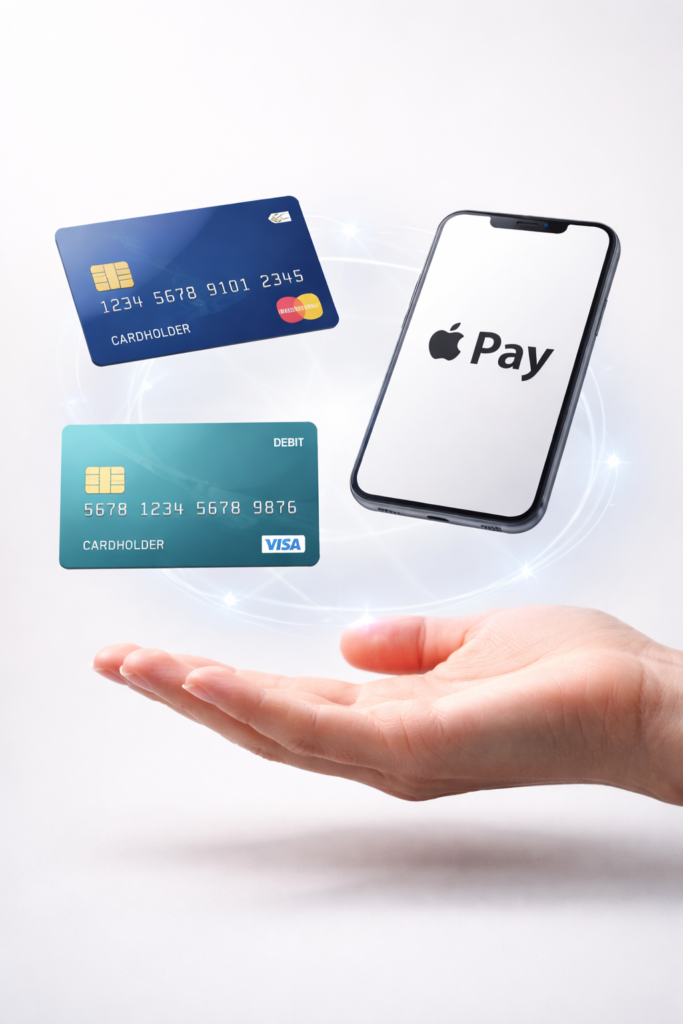
Now that your account is verified, you need to connect a way to fund it. Here are the most common options:
Bank Transfer (ACH / SEPA / Wire)
Best for: Lower fees, larger purchases
Bank transfers are typically the cheapest way to buy crypto. ACH transfers (US) and SEPA transfers (Europe) are often free or very low cost. The downside: they can take 1–5 business days to clear.
Debit Card / Credit Card
Best for: Speed and convenience
Card purchases are instant, but they come with higher fees, typically 2–4% on top of the trading fee. Some credit card companies also treat crypto purchases as cash advances, adding even more fees. Use debit cards when possible.
Apple Pay / Google Pay
Best for: Mobile users who want quick purchases
Many exchanges now support digital wallets. Fees are similar to card purchases, but the convenience is hard to beat.
PayPal (Limited)
Best for: Users who already have PayPal balances
Some exchanges accept PayPal, though support varies by region. Fees tend to be moderate.
⚠️ Avoid: Buying crypto with a credit card if you can’t pay it off immediately. High fees plus potential interest charges can eat into your investment quickly.
Step 5: Making Your First Purchase
This is the moment you’ve been waiting for. Here’s how to actually buy cryptocurrency:
5.1 — Navigate to the Buy/Trade Section
Most exchanges have a prominent “Buy” or “Trade” button. For beginners, look for the simple buy interface rather than the advanced trading terminal.
5.2 — Select Your Cryptocurrency
Choose which crypto you want to buy. For your first purchase, Bitcoin (BTC) or Ethereum (ETH) are the safest choices. They’re the most established, most liquid, and most widely supported.
5.3 — Enter the Amount
You can enter either:
- The amount of fiat you want to spend (e.g., $100)
- The amount of crypto you want to buy (e.g., 0.001 BTC)
The exchange will show you the equivalent amount and any applicable fees before you confirm.
5.4 — Review and Confirm
Double-check everything:
- The crypto you’re buying
- The amount
- The total cost including fees
- The payment method
Once you’re satisfied, hit “Buy” or “Confirm.” The crypto will typically appear in your exchange wallet within seconds to a few minutes.
5.5 — Congratulations! 🎉
You now own cryptocurrency. Your holdings will appear in your exchange account’s portfolio or wallet section. You can track the value in real-time as the market moves.
✅ Quick Recap — Your First Purchase:
- Log in to your exchange
- Click “Buy”
- Select Bitcoin or Ethereum
- Enter the amount you want to spend
- Review fees and confirm
- Done — crypto is in your account!
Step 6: Securing Your Crypto (Wallets Explained)
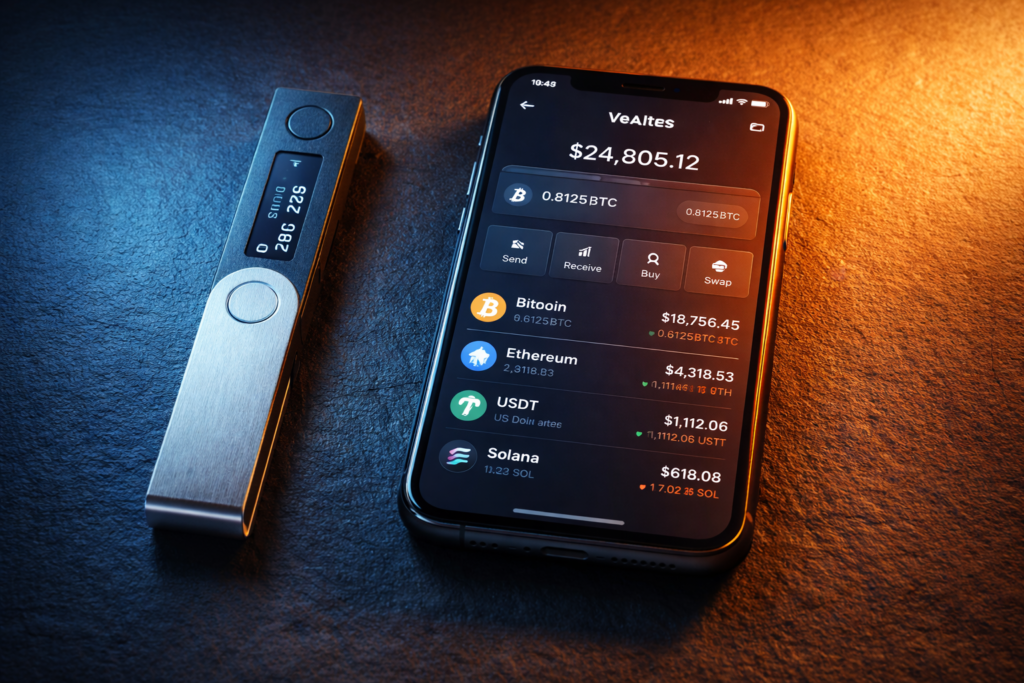
Here’s a truth every crypto holder needs to understand: if you leave your crypto on an exchange, you don’t fully control it. Exchanges can be hacked, frozen, or even go bankrupt—and if they do, your funds could be at risk.
The crypto mantra is: “Not your keys, not your crypto.”
For true ownership, you need to understand crypto wallets.
What Is a Crypto Wallet?

A crypto wallet doesn’t actually “store” your cryptocurrency—your coins always live on the blockchain. Instead, a wallet stores your private keys, the cryptographic passwords that prove you own your crypto and allow you to send it.
There are two main categories:
🔥 Hot Wallets (Software Wallets)
Hot wallets are apps connected to the internet, available as mobile apps, desktop programs, or browser extensions.
Pros:
- Free to use
- Convenient for frequent transactions
- Easy to set up
Cons:
- Connected to the internet = vulnerable to hacks
- Only as secure as your device
Popular hot wallets: MetaMask, Trust Wallet, Exodus, Coinbase Wallet
Best for: Smaller amounts you use regularly, exploring DeFi and dApps
🧊 Cold Wallets (Hardware Wallets)
Cold wallets are physical devices that store your private keys completely offline. They look like USB drives and only connect to the internet when you need to sign a transaction.
Pros:
- Maximum security—keys never touch the internet
- Immune to remote hacking
- Ideal for long-term storage
Cons:
- Cost money ($50–$400)
- Less convenient for frequent trading
- If lost without backup, funds are gone forever
Popular hardware wallets: Ledger Nano S Plus (~$79), Ledger Nano X (~$149), Trezor Safe 3 (~$79), Trezor Safe 5 (~$169)
Best for: Larger holdings, long-term storage, serious investors
The Seed Phrase: Your Master Backup
When you set up any non-custodial wallet (hot or cold), you’ll receive a seed phrase, usually 12 or 24 random words. This phrase is the master key to your wallet. With it, you can recover your crypto on any compatible device. Without it, your funds are gone if you lose access.
Critical rules for your seed phrase:
- Write it down on paper (never store digitally)
- Store it in a secure location (fireproof safe, bank deposit box)
- Never share it with anyone ever
- Consider making multiple copies in different secure locations
How Much Should You Keep Where?
A common strategy:
- Exchange: Only what you’re actively trading
- Hot wallet: Small amounts for DeFi, NFTs, or spending
- Cold wallet: The majority of your holdings (long-term storage)
Step 7: Common Mistakes to Avoid
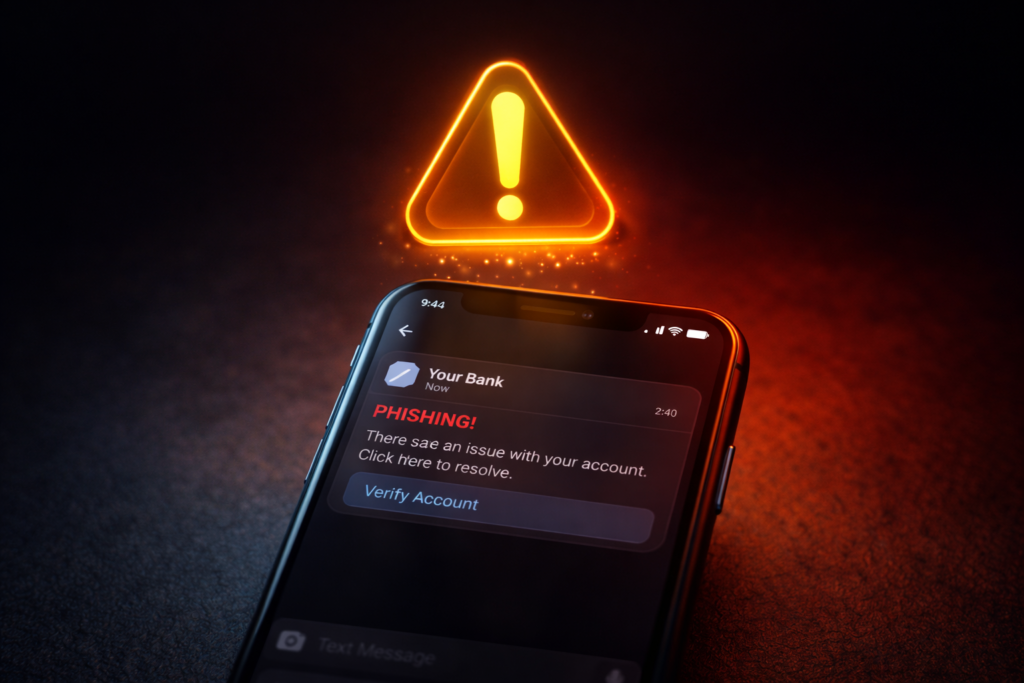
Every beginner makes mistakes. Here’s how to avoid the most costly ones:
❌ Investing More Than You Can Afford to Lose
Crypto is volatile. Prices can drop 20%, 50%, or more in weeks. Only invest money you’re genuinely okay with losing. This isn’t pessimism, it’s responsible risk management.
❌ Chasing Hype and FOMO
When you see a coin pumping 500%, the opportunity has usually already passed. Buying at the top because “everyone’s talking about it” is a recipe for losses. Stick to a plan.
❌ Ignoring Security
Weak passwords, no 2FA, seed phrases stored in email or cloud photos, these mistakes cost people millions every year. Security isn’t optional.
❌ Falling for Scams
If someone promises guaranteed returns, free crypto for sending them crypto first, or “secret” investment opportunities, it’s a scam. Always. Legitimate projects don’t work this way.
❌ Panic Selling
Markets go down. Sometimes a lot. Selling in a panic locks in your losses. If you believe in your investment long-term, short-term dips are noise, not signals.
❌ Not Doing Your Own Research (DYOR)
Never buy a crypto just because someone online told you to. Understand what you’re buying, why it has value, and what the risks are. This applies to everything, including advice in this article.
What to Do After Your First Purchase

Congratulations, you’re officially a crypto holder. Here’s what comes next:
1. Track your portfolio. Use your exchange’s built-in tools or apps like CoinGecko, CoinMarketCap, or Delta to monitor your holdings.
2. Learn about dollar-cost averaging (DCA). Instead of buying everything at once, consider investing a fixed amount regularly (weekly, monthly). This smooths out volatility over time.
3. Explore staking. Some cryptocurrencies let you earn rewards by “staking”—essentially locking your coins to help secure the network. Many exchanges offer built-in staking with just a few clicks.
4. Consider a hardware wallet. Once your holdings grow beyond what you’d be comfortable losing, invest in proper cold storage.
5. Keep learning. The crypto space evolves fast. Stay curious, stay skeptical, and keep educating yourself.
Key Takeaways
| ⚡ Start with a reputable exchange. Coinbase, Kraken, Crypto.com, and Gemini are beginner-friendly, regulated platforms with strong security. |
| 🔒 Security is non-negotiable. Enable 2FA immediately. Use strong, unique passwords. Never share your seed phrase with anyone. |
| 💰 You don’t need much to start. Most exchanges let you buy as little as $1–$10 worth of crypto. Start small, learn the process, then scale up. |
| 📦 Consider self-custody for larger amounts. Exchanges are convenient, but a hardware wallet gives you true ownership and protection against platform failures. |
Frequently Asked Questions
How much money do I need to start buying crypto?
Most exchanges have minimums between $1 and $10. You can start with whatever amount you’re comfortable with, there’s no need to buy a whole Bitcoin.
Is it safe to buy cryptocurrency?
Buying from regulated exchanges with proper security (2FA, cold storage) is generally safe. The bigger risks come from scams, phishing, and poor personal security practices.
What’s the best cryptocurrency to buy for beginners?
Bitcoin (BTC) and Ethereum (ETH) are the most established, most liquid, and safest starting points. Branch into altcoins only after you understand the basics.
Do I have to pay taxes on cryptocurrency?
In most countries, yes. Crypto is typically treated as property, meaning you may owe taxes when you sell at a profit. Consult a tax professional for your specific situation.
Can I lose all my money in crypto?
Yes, it’s possible, especially with smaller, riskier coins. That’s why you should never invest more than you can afford to lose and stick to established assets when starting out.
The Bottom Line
Buying cryptocurrency isn’t as complicated as it might seem. With the right exchange, basic security practices, and a bit of patience, you can go from complete beginner to crypto owner in less than an hour.
The hardest part? Taking that first step. Everything after gets easier with experience.
Start small. Learn as you go. And remember: this is a marathon, not a sprint. The best investors aren’t the ones who time the market perfectly, they’re the ones who stay informed, stay patient, and stay in the game.
Welcome to crypto. 🚀
Disclaimer: This article is for educational and informational purposes only and should not be considered financial advice. Cryptocurrency investments carry significant risk. Always do your own research (DYOR) and consult with a financial advisor before making investment decisions.
